

Top Reading
Sorry, there is nothing for the moment.
Most Upvoted

Industry Program

Background

Featuring world-class keynotes, industry expert speakers, technology trend panels, standard overviews, in-depth workshops, specialized seminars, and interactive demos, the Industry Program offers a comprehensive agenda designed to connect innovation with real-world applications. It consists of five well-organized components:


Industry Keynotes

Program Schedule
Date Time Speaker Talk Title
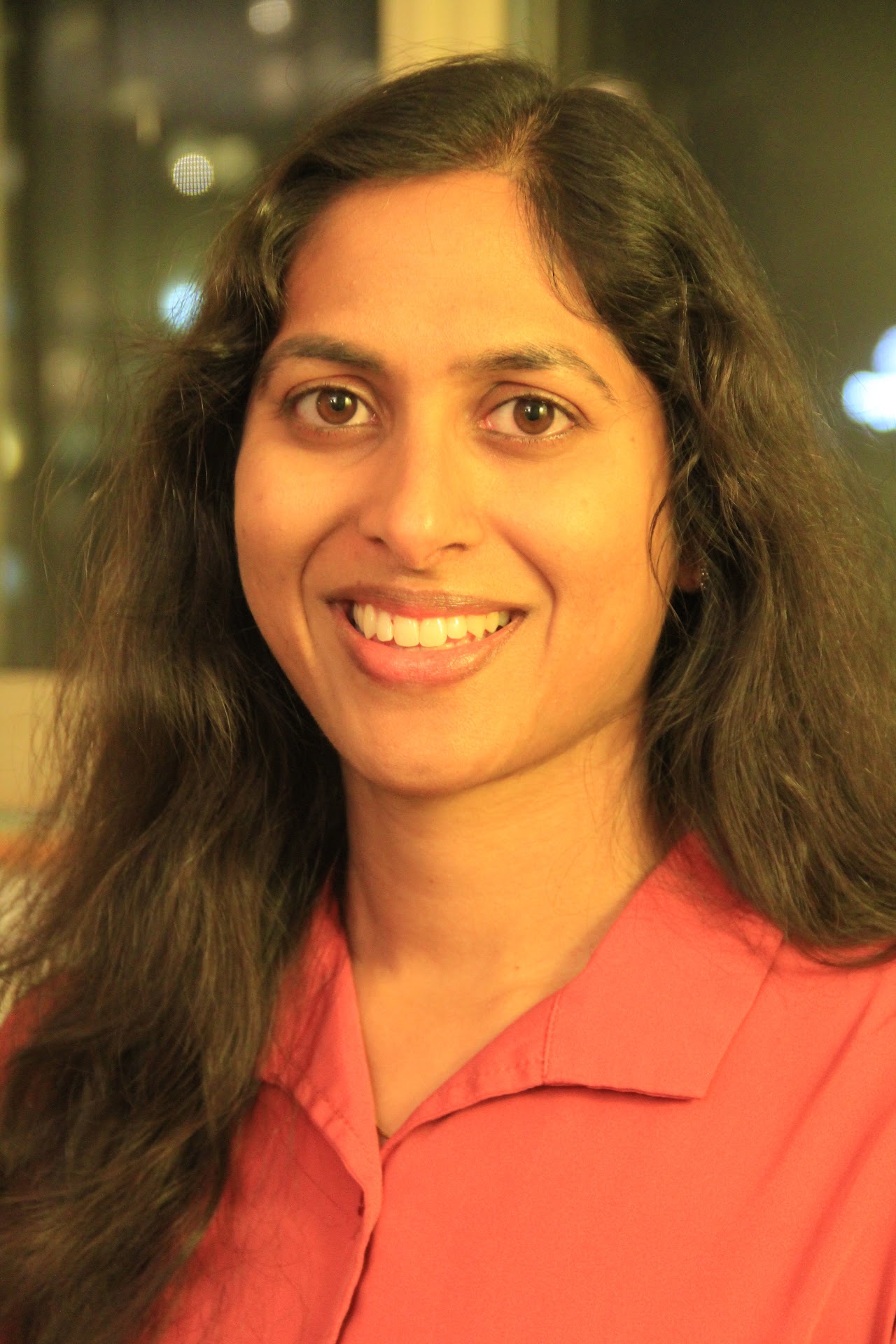
May 6 8:00-9:00 Dr. Tara Sainath
Distinguished Research Scientist
Google DeepMind
Audio Processing with Large Language Models
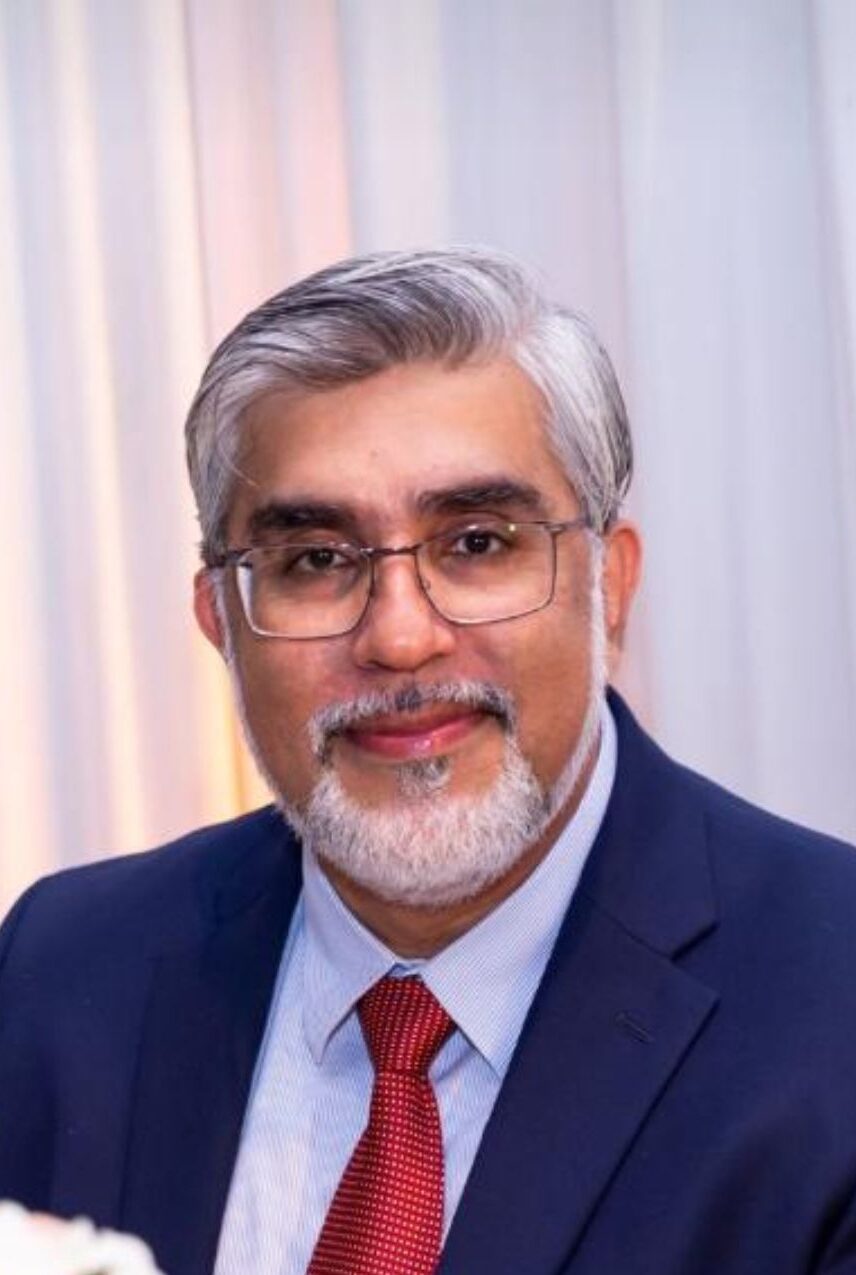
May 7 8:00-9:00 Dr. Hamid Sheikh
Vice President
Samsung Research
Latest Trends in AI Signal Processing for Consumer Experiences
May 8 8:00-9:00 Soma Velayutham
Vice President
NVIDIA
AI-Native 6G: Building the Wireless Stack for AI-RAN and 6G Innovation

Talk 1: Audio Processing with Large Language Models

Wednesday, 6 May 2026, 8:00 – 9:00
Location: Auditorium
Speaker: Dr. Tara Sainath, Distinguished Research Scientist, Google Deep Mind

Abstract: Large Language Models (LLMs) have recently introduced a paradigm shift in Machine Learning, including in audio processing tasks. In automatic speech recognition, we have improved understanding quality across a large number of languages, trained within one universal model. In generation, prompt-based capabilities and naturalness have opened up new paradigm shifts. In translation, we can translate numerous language pairs in real time. Finally, in dialogue, we can build single end-to-end systems that understand and reply to user queries. These capabilities are transforming audio products across the industry. This talk will detail the research and product impact of audio LLMs at Google.


Dr. Tara Sainath holds an S.B., M.Eng, and PhD in Electrical Engineering  and Computer Science from MIT. Her expertise in speech recognition and deep neural networks led to a 5 year stint at IBM T.J. Watson Research Center, and currently fuels her work as the Lead of Gemini Audio at Google DeepMind.  There, she focuses on the integration of audio capabilities with large language models (LLMs).

Her technical prowess is recognized through her IEEE Fellowship and awards such as the 2021 IEEE SPS Industrial Innovation Award and co-recipient of the 2022 IEEE SPS Signal Processing Magazine Best Paper Award. She has served as a member of the IEEE Speech and Language Processing Technical Committee (SLTC) as well as the Associate Editor for IEEE/ACM Transactions on Audio, Speech, and Language Processing. Dr. Sainath’s leadership is exemplified by her roles as Program Chair for ICLR (2017, 2018) and her extensive work co-organizing influential conferences and workshops, including: Interspeech (2010, 2016, 2019), ICML (2013, 2017), and NeurIPS 2020. Her primary research interests are in deep neural networks for speech recognition.


Talk 2: Latest Trends in AI Signal Processing for Consumer Experiences

Thursday, 7 May 2026, 8:00 – 9:00
Location:
Auditorium
Speaker: Dr. Hamid Sheikh, Vice President, Samsung Research

Abstract: AI has been the driving force in technological innovation for the past several years, significantly impacting signal processing in consumer devices such as cameras, audio systems, computer vision, and health and fitness devices. The rapid development of generative techniques has also necessitated constant adaptation of these techniques to adapt to evolving consumer expectations. The challenges coming from small form factor mobile devices such as small batteries, low light and signal strength, and limited compute, continue to be hard physical constraints against which algorithmic methods need to keep improving. This talk will go over the challenges and opportunities that come from enabling the latest generation of AI techniques to improve consumer experiences.


Dr. Hamid Sheikh is Vice President R&D at Mobile Processor Innovation Team in Samsung Research America, where he leads a team of AI computational imaging experts developing algorithms and features for Samsung flagship smartphones. Prior to Samsung, he was Camera technology lead in OMAP Platform Business Unit at Texas Instruments Inc, where he led the development of ISP and camera solution. He completed his PhD from the University of Texas at Austin, where he researched image and video quality assessment algorithms, and contributed to the development of the world famous Structural Similarity Metric (SSIM). He is an IEEE Fellow, and winner of two technology Emmy Awards for his contributions to image and video quality, and numerous Samsung internal awards for his contributions to camera technology innovations.


Talk 3: AI-Native 6G: Building the Wireless Stack for AI-RAN and 6G Innovation

Friday, 8 May 2026, 8:00 – 9:00
Location:
Auditorium
Speaker: Soma Velayutham, Vice President, NVIDIA

Abstract: The transition to 6G marks a fundamental evolution from connectivity-centric networks to AI-native wireless infrastructure. In this keynote, we explore how AI-RAN principles redefine the wireless stack, embedding intelligence across signal processing, radio access, core networks, and edge computing. We highlight how data-driven learning, accelerated computing, and tight AI–network co-design enable autonomous operation, dynamic optimization, and multi-modal sensing-communication. AI-native 6G provides the foundation for scalable innovation, supporting applications that extend beyond traditional communications and positioning wireless networks as intelligent, adaptive platforms for the next decade.


Soma Velayutham is the Vice President, AI & Telecoms at NVIDIA, where he is responsible for developing and evangelizing AI into telecoms and wireless communications. He is a successful serial intrapreneur and product leader with more than 25 years in the software and high-tech industries. He has incubated and launched multiple software products globally for large corporations. He has 11 patents and the full product-lifecycle experience from R&D to GTM.


Industry Expert Speakers

Program Schedule
Location: Auditorium
Session
order
Session’s Theme Date Time Proposal ID
1 Integrated Sensing, Communications and Radar May 5 14:00–16:00 603, 631, 641
2 Audio Technology and Consumer Audio Innovation May 6 9:00–11:00 628, 629, 632
3 Speech and Audio AI Systems May 6 14:00–16:00 609, 626, 640
4 Edge AI and Efficient Intelligence May 7 9:00–11:00 612, 616, 639
5 AI Security and Strategic Applications May 7 14:00–16:00 624, 633
6 Applied AI Systems and Defense Applications May 8 9:00–11:00 618, 627, 638

603: The Future of Mobile Communications: Challenges and Opportunities

Bio: Dr. Yongxing Zhou received his Ph.D degree in Tsinghua University, China in 2002. He is now a professor with Beijing University of Posts and Telecommunications (BUPT). He has been a prestigious wireless telecom technical leader in the development of MIMO and smart spectrum access innovative technologies for 4G and 5G cellular communication standards and products. Before joining BUPT in September 2025, he was with Huawei as Principal Scientist of Standard & Patent and Huawei Device communication standard Principal Expert. He has led 16 years of Huawei 4G/5G/Device Communication research and standardization including multiple paradigm shifts such as Linear Combination Double MIMO Codebook, Flexible Bandwidth Part (a.k.a. BWP), beam based cellular initial access and the world’s first commercial satellite-smart phone direct communication protocols that have shaped landscape of 5G mobile communications.

Dr. Zhou’s current research interest includes 5G Advanced and 6G technologies such as Artificial Intelligence (AI) Communication, Satellite Communication, Integrated Sensing and Communication (ISAC), cell free MIMO and reconfigurable intelligent surface (RIS).

Dr. Zhou has more than 200 Granted U.S. Utility Patents and several tens of Standard Essential Patents (SEP) have been widely used in global commercial 4G/5G base stations and terminals.

Abstract: 5G was expected to be the key driving force behind the shift of digitalization of all industries and a more intelligent, connected world in addition to the provision of much improved mobile broadband (MBB) internet user experience. However, ten years later it seems both industry digitalization transformation and MBB business are quite behind the schedule and expectation. For example, it is worth mentioning the whole MBB revenue of telecom industry in China has been declining since 2023. There would be no future of mobile communications if those deadly challenges were always put aside and could not be met effectively.

Now 6G is on the way. Without exception, the newer generation of mobile communication has always been highly expected and 6G has been given the label of “enabler of connected intelligence”. It has been conceived with many attractive properties such as ultra-fast, extremely low latency, ubiquitous connectivity, network and edge sensing, along with inferencing capabilities and distributed learning. However, how to meet and tackle with the aforementioned unprecedented challenges still remained unclear.
This talk explores challenges and opportunities of mobile communications at the moment, how 6G technology components combined with device and network API exposure, transform wireless networks from passive data conduits into active enablers of high value businesses (e.g. AI services). Meanwhile, the cutting edge technologies in the areas of AI communication, Satellite Communication, advanced Waveform&Modulation, Coding and Sequences are also deeply addressed in the context.

Panel 1: Open Audio Codecs for the Next Generation of Immersive and Scalable Media

Tuesday, 5 May 2026, 16:30 – 18:30
Location:
Auditorium

Moderator:  Rémi Audfray, Meta, ACWG Co-Chair

Panelists:

  • Toni Hirvonen: Samsung
  • Jan Skoglund: Google
  • Alan Silva: Spatial9
  • Jean-Marc Valin: Google
  • Chris Hold: Meta
  • Nick Zacharov: Meta

Abstract

The audio industry is at a pivotal moment: immersive experiences, spatial audio, and scalable streaming demand new, open, and royalty-free codec solutions. The Alliance for Open Media (AOM) Audio Codec Working Group (ACWG) is driving the development of the Open Audio Codec (OAC) and Open Audio Renderer (OAR) specifications to address these challenges. This panel will convene leading industry experts to discuss the technical, business, and standardization imperatives for open audio formats, with a special focus on spatial audio, real-time communication, and efficiency gains.  The topics will include:

  • Limitations of Existing Open Audio Codecs for Immersive Audio
  • Innovations in Codec Algorithms
  • Advanced Renderer Design
  • Renderer Listening Tests and Perceptual Evaluation
  • Call to Action

Bio

Rémi Audfray is an Engineering Manager on the Media Core team at Meta, building audio technologies used by billions of people worldwide in audio/video calling, messaging, conversational AI, and entertainment across Messenger, Instagram, WhatsApp, Facebook, MetaAI, Wearables, and other applications. Rémi’s prior experience includes XR Audio at Reality Labs, Sound Technology Research at Dolby Labs, and AR audio at Magic Leap. He received his ‘Diplôme d’Ingénieur’ from the Ecole Centrale de Lyon (France), and MSc. in Music Technology from IUPUI (USA) in 2006. He is passionate about advancing the state of the art of audio technology in the service of great user experiences.

Toni Hirvonen studied acoustics at the Helsinki University of Technology (now Aalto University), where he obtained a PhD in audio signal processing and spatial audio. After a post-doc position as a Marie Curie fellow at FORTH Greece, he has worked internationally in the audio industry since 2010. His projects have involved commercialization of spatial and immersive audio, audio coding, understanding spatial auditory perception as well as applying machine learning/AI for audio. Currently, he is a researcher at the Samsung Research America DMS Audio Lab in Los Angeles supporting and contributing to the Alliance for Open Media Eclipsa format on behalf of Samsung.

Jan Skoglund leads a team at Google in San Francisco, CA, developing speech and audio signal processing components, contributing to Google’s software products (such as Meet) and hardware products (such as Chromebooks). Jan received his Ph.D. degree in 1998 from Chalmers University of Technology in Sweden. His doctoral research was centered around low bitrate speech coding. After obtaining his Ph.D., he joined AT&T Labs-Research in Florham Park, NJ, where he continued to work on low bit rate speech coding. In 2000, he moved to Global IP Solutions (GIPS) in San Francisco and worked on speech and audio processing technologies, including compression, enhancement, and echo cancellation, which were particularly tailored for packet-switched networks. GIPS’ audio and video technology was integrated into numerous deployments by companies such as IBM, Google, Yahoo, WebEx, Skype, and Samsung. The technology was later open-sourced as WebRTC after GIPS was acquired by Google in 2011. Jan is an IEEE Senior Member involved in the Audio and Acoustic Signal Processing TC and the Speech and Language Processing TC, and he is an Associate Editor for IEEE Transactions on Acoustics, Speech, and Language Processing.

Alan Silva is Chief Technology Officer at Spatial9, where he leads research and development initiatives at the intersection of machine learning, distributed systems, and immersive media. He specializes in designing scalable, real‑world solutions that combine advanced algorithms with high‑performance computing to address complex data and AI challenges. He has held technical and research roles at Alcatel‑Lucent and Samsung, where his work resulted in several granted patents. He has also contributed to the growth of leading data and AI organizations, including Cloudera, H2O.ai, and Databricks, spanning open‑source technologies, large‑scale analytics, and enterprise AI platforms. Alan is a strong advocate for open source and actively contributes to collaborative projects that advance the state of the art and strengthen the broader engineering community. His current interests center on immersive audio, where he applies machine learning and artificial intelligence to develop adaptive, interactive soundscapes that respond to user context and behavior, enhancing both engagement and the perceived quality of musical experiences.

Jean-Marc Valin, Ph.D., is a Senior Staff Research Scientist at Google and a long-time contributor to the Xiph.Org Foundation. He received his B.Eng., M.Sc.A., and Ph.D. in Electrical Engineering from the University of Sherbrooke, Canada. He is a lead architect of the Opus and Speex audio codecs and also contributed to the AV1 video codec. His research focuses on speech and audio coding, neural vocoders (LPCNet, FARGAN), and deep-learning-based speech enhancement. He was previously at Amazon Web Services and Mozilla.

Chris Hold is a Research Scientist at Meta Reality Labs Research Audio, where he focuses on spatial audio capture, reproduction, and perception. His current research interests include head-worn microphone arrays and spatial audio coding. Chris earned his PhD from the Aalto Acoustics Lab, specializing in perceptually-motivated parametric coding of higher-order Ambisonics.

Nick Zacharov (D.Sc. (Tech.), M.Sc., B.Eng. (Hons.), C.Eng., FAES) is Perceptual Audio Evaluation Technical Lead at Meta Reality Labs, focusing on applied sound quality research, aerodynamics and ML-model development for wearables product development. With an academic background in electroacoustics, acoustics and signal processing, Nick has broad industrial experience in the audio profession spanning from mobile phone audio to AR/VR devices, professional studio monitor design to smart and VR glasses. Nick is the co-author of “Perceptual Audio Evaluation – theory, method and application”, and also editor/co-author of the book “Sensory Evaluation of Sound”. He has been an active member of the Audio Engineering Society and has more than 90 publications and patents to his name.


Panel 2: Industrializing AI-Native, Distributed, and Sustainable 6G with Open RAN and TN-NTN Integration

Wednesday, 6 May 2026, 16:30 – 18:30
Location:
Auditorium

Moderator: Engin Zeydan: CTTC (Centre Tecnològic de Telecomunicacions de Catalunya)

Panelists:

  • Luis M. Contreras: Telefónica CTIO
  • Sihem Cherrared:  Orange Innovation
  • Carles Navarro Manchón: Keysight Technologies
  • Maria A. Serrano: Nearby Computing

Abstract

As 6G research quickly advances from conceptual visions to large-scale experimental platforms and pre-commercial trials, the industry faces a critical question: how can AI-native, Open RAN-based, and TN-NTN-integrated architectures be deployed in a trustworthy, scalable, and sustainable way?

This panel brings together leading industrial stakeholders, operators, vendors, and applied research organizations to discuss the challenges and opportunities of industrializing 6G connectivity. A unified 6G architecture proposes a unified architecture based on Open RAN, distributed cloud-native orchestration, AI-driven control loops, intent-based communications for TN-NTN, and network exposure using frameworks such as CAPIF, CAMARA APIs. Although these concepts are well explored in research, their real-world deployment presents significant issues related to operational complexity, AI governance, interoperability, cost, sustainability, and regulatory compliance (AI Act, GDPR, CRA).

The panel will focus on six tightly coupled industrial themes:

  • From Architecture to Operations: Making Unified 6G Architecture Deployable at Scale
  • TN-NTN Convergence as a Commercial Service, Not a Research Demo
  • AI-Native Control Loops vs. Human Control: Where Should Automation Stop?
  • Interoperability Nightmares: Multi-Vendor Open RAN in Practice
  • Network Exposure in AI-Driven Networks
  • Sustainability Beyond KPIs: Is Unified 6G Architecture Actually Greener?

Bio

Dr. Engin Zeydan is a senior researcher at CTTC with extensive experience in AI-native network management, Open RAN, TN-NTN integration, and trust frameworks for 6G. He has contributed to multiple EU SNS JU projects (including UNITY-6G) and regularly collaborates with industry partners on experimental platforms, standardization, and large-scale validation.

Dr. Luis M. Contreras completed a six-year Telecom Engineer degree (M.Sc.) at the Universidad Politécnica of Madrid (1997), holds an M.Sc. on Telematics jointly by the Universidad Carlos III of Madrid and the Universitat Politècnica of Catalunya (2010), and a Ph.D. on Telematics by the Universidad Carlos III of Madrid (2021). Since August 2011 he is part of Telefónica I+D / Telefónica CTIO, working on SDN, transport networks and their interaction with cloud and distributed services, and interconnection topics.

Dr. Carles Navarro Manchón received the degree in telecommunication engineering from the Miguel Hernández University of Elche, Spain, in 2006, and the Ph.D. degree in wireless communications from Aalborg University, Denmark, in 2011. Since 2023, he has been Senior Researcher with Keysight Technologies, Spain.

Dr. Sihem Cherrared received her PhD degree in 2020 at the University of Rennes 1 France, in INRIA and ORANGE Labs, on the fault management of programmable multitenant networks. She is currently working as a senior R&D engineer on network management and automation at Orange Innovation.

Dr. Maria A. Serrano is a senior researcher in the R&I department at Nearby Computing. She received her PhD in Computer Architecture from the Technical University of Catalonia (UPC) in March 2019 and works on orchestration techniques in edge/cloud computing environments.


Panel 3: From Labs to Learners: Preparing the Next Generation Signal Processing Workforce through Industry-Academic Coalitions

Thursday, 7 May 2026, 16:30 – 18:30
Location:
Auditorium

Moderator:

  • Arvind Rao: The University of Michigan, Ann Arbor
  • Yang Lei: HP Inc.

Panelists:

  • Ioannis Katsavounidis: Meta
  • Ivan Tashev: Microsoft
  • Gabriele Bunkheila: MathWorks
  • Marios S. Pattichis: IEEE Education Board
  • Ramani Duraiswami: University of Maryland

Abstract

As AI, signal processing, and intelligent sensing systems transition from research labs into mission-critical roles across industry sectors (including healthcare, mobility, energy, defense, media, and sustainability), workforce readiness has emerged as a pressing bottleneck. While ICASSP is home to world-class research, a key translational gap remains: how do we prepare the next generation of engineers and interdisciplinary professionals to translate these innovations into real-world deployment?

This panel explores how industry-academic partnerships and professional societies like IEEE can co-create scalable, inclusive educational ecosystems to meet that need. The panel will examine the full continuum of talent development: from K–12 STEM engagement to university curricula redesign, to professional and continuing education for current and emerging roles in the AI/SP workforce.

It will emphasize:

  • The shifting expectations of employers: from algorithmic skillsets alone to domain-contextualized system thinking, teamwork, and lifecycle awareness.
  • The growing need for interdisciplinary fluency: as professionals in product, regulatory, clinical, or sustainability roles increasingly interact with SP/AI systems.
  • The role of companies like Microsoft, Meta, and MathWorks: in creating content, platforms, and credentialing models to scale global talent capacity.
  • How IEEE can act as a trusted, neutral convenor: co-developing open, modular, and locally adaptable educational formats for use by chapters, institutions, and startups alike.
  • How to convert ICASSP research outputs into real-world learning artifacts: enabling faculty and companies to jointly build pathways that connect signal processing innovation with employment opportunity.
  • This panel intends to be a dynamic conversation among stakeholders building the future of work in SP and AI: equally relevant to researchers, engineers, educators, product leaders, and outreach directors. Panelists will share deployment experiences, program models, and lessons learned, followed by collaborative ideation with the audience.

Bio

Arvind Rao is a Professor in the Department of Computational Medicine and Bioinformatics, Biostatistics, Radiation Oncology at the University of Michigan. His group uses image analysis and AI methods to link imaging and non Euclidean signals across biological scales (i.e. single cell, tissue and radiology data). Such methods have found application in various areas of biomedical data science. Arvind received his PhD in Electrical Engineering and Bioinformatics from the University of Michigan, specializing in transcriptional genomics, and was a Lane Postdoctoral Fellow at Carnegie Mellon University, specializing in bioimage informatics. He is also a Fellow of American Medical Informatics Association (AMIA), The Royal College of Pathology (RCPath) in the UK (by published works) and American Association for Advancement in Science (AAAS). He is an active contributing member of several initiatives with the IEEE SPS Education Board (K-12, Education Community) and Data Science Initiative.

Dr. Yang Lei is a Principal AI Research Engineer in HP Inc. She currently leads the development of novel and robust AI technologies for future video conferencing solutions. In previous roles, she defined and developed the core computer vision technologies for HP Labs’ education initiative and expanded the AI capabilities in the company’s immersive computing platform. During HP’s microfluidics business creation, she led the development of key algorithms for isolating circulating tumor cells. This was a significant step toward affordable cancer diagnosis and personalized treatment and earned her the HP Reinventor Award, HP’s highest innovation honor. She authored 20+ patent applications and more than 19 publications and talks (IEEE ICASSP, ICIP, ISBI, Grace Hopper Celebration) in high-priority areas of Computer Vision and AI. Dr. Lei is an IEEE Senior Member. She received the inaugural Purdue Engineering 38 by 38 award in 2024, for her track record of successfully applying AI technologies across key domains. She is also the recipient of the 2025 Society of Women Engineers (SWE) Pathfinder Award, the 2023 IEEE SPS Industry Young Professional Leadership Award, and the 2021 Eaton Award of Design Excellence.

Dr. Ioannis Katsavounidis is part of the Video Infrastructure team, leading technical efforts in improving video quality and quality of experience across all video products at Meta. Before joining Meta, he spent 3.5 years at Netflix, contributing to the development and popularization of VMAF, Netflix’s open-source video quality metric, as well as inventing the Dynamic Optimizer, a shot-based perceptual video quality optimization framework that brought significant bitrate savings across the whole video streaming spectrum. He was a professor for 8 years at the University of Thessaly’s Electrical and Computer Engineering Department in Greece, teaching video compression, signal processing and information theory. He was one of the cofounders of Cidana, a mobile multimedia software company in Shanghai, China. He was the director of software for advanced video codecs at InterVideo, the makers of the popular SW DVD player, WinDVD, in the early 2000’s and he has also worked for 4 years in high-energy experimental Physics in Italy. He is one of the co-chairs for the statistical analysis methods (SAM) and no-reference metrics (NORM) groups at the Video Quality Experts Group (VQEG). He is actively involved within the Alliance for Open Media (AOMedia) as co-chair of the software implementation working group (SWIG). He has over 150 publications, including 50 patents. His research interests lie in video coding, quality of experience, adaptive streaming, and energy efficient HW/SW multimedia processing. He is an IEEE Fellow.

Dr. Ivan Tashev is a Partner Software Architect in Microsoft Research (MSR), Redmond, WA, USA, where he leads the Audio and Acoustics Research Group. His interests include multichannel signal processing with machine learning and artificial intelligence. Ivan Tashev also coordinates the Brain-Computer Interfaces project in MSR. Dr.Tashev has published two books as a sole author, two book chapters, 100+ scientific papers, listed as inventor in 50 US patents. Ivan Tashev is affiliate professor in the Department for Electrical and Computer Engineering of University of Washington in Seattle, USA, and honorary professor at Technical University of Sofia, Bulgaria. Technologies created by Dr. Tashev are incorporated in many Microsoft products, he served as the audio architect for Kinect and for HoloLens. He is an IEEE Fellow, member of AES and ASA. More details about him can be found in his web page https://www.microsoft.com/en-us/research/people/ivantash/.

Gabriele Bunkheila is a senior product manager at MathWorks, where he coordinates the strategy of MATLAB toolboxes for audio and DSP. After joining MathWorks in 2008, he worked as a signal processing application engineer for several years, supporting MATLAB and Simulink users across industries from algorithm design to real-time implementations. Before MathWorks, he held a number of research and development positions related to signal processing. Manages global partnerships with universities and K–12 systems for STEM and SP/AI learning.

Marios S. Pattichis ([email protected]) is a Professor in the Department of Electrical and Computer Engineering at the University of New Mexico. He holds a Ph.D. In Computer Engineering, an M.S.E. In Electrical Engineering, a B.A. (high honors) in Mathematics, and a B.Sc. (high honors and special honors) in Computer Sciences, all from the University of Texas at Austin. Since 2012, he has been involved in research projects that teach Python to middle-school students from underrepresented groups. He is the chair of the IEEE Signal Processing Society’s K-12 subcommittee on Education. At UNM, he is the director of Online Programs, including the new online M.Sc. Degree in Applied Machine Learning & Artificial Intelligence Systems Engineering. His current research interests include integrating Mathematics, Computer Programming, and AI into Engineering Education. He has served as Associate Editor to several journals and as Senior Area Editor for IEEE Transactions on Image Processing and IEEE Signal Processing Letters. He is a Senior Member of the IEEE, a Senior Member of the National Academy of Inventors, and a Fellow of the European Alliance of Medical and Biological Engineering and Science (EAMBES).

Ramani Duraiswami is Professor and Associate Chair (for Graduate Studies) at the Department of Computer Science, and in UMIACS, at the University of Maryland. Prof. Duraiswami got his B. Tech. at IIT Bombay, and his Ph.D. at The Johns Hopkins University. After spending a few years working in industry, he joined the University of Maryland, where he established the Perceptual Interfaces and Reality Lab. He has broad research interests, including both algorithm development (for machine learning, statistics, wave propagation and scattering, the fast multipole method), and systems development/applications (spatial audio capture rendering and personalization; computer vision, acoustics).  He has published over 280 peer-reviewed archival papers, co-authored a book,  has several issued patents, and according to Google Scholar has an h-index of 64 (in 2023). Some of his research has been spun out into a startup, VisiSonics, whose technology is in millions of devices. A particular theme of Prof. Duraiswami’s recent research has been combining machine learning with scientific simulation, and the understanding of the interaction of waves with objects – electromagnetic, acoustic, and visual.


Panel 4: Scaling Intelligence for the Smart Society: Human-Centric, Sovereign, and Efficient Digital Twins

Friday, 8 May 2026, 14:00 – 16:00
Location:
Auditorium

Moderator:

  • Antonio J. Jara: Libelium and Gaia-X evangelist
  • Arijit Ukil: TCS Research

Panelists:

  • Hillol Kargupta: Agnik LLC and UMBC
  • Martin Serrano: NIST  and   University of Galway
  • Codrina Ana-Maria Lauth: Lauth Transmedia GmbH
  • Juan Jose Hierro:  FIWARE Foundation
  • Francisca Rubio: Gaia-X Hub

Abstract

The paradigm is shifting from the “Smart City,” a geography anchored in infrastructure, to the “Smart Society,” an ecosystem defined by its people. In this expanded canvas, the Industrial Digital Twin (IDT) must evolve from asset monitors to engines of public well-being with scaling across health, energy, mobility, and logistics with data aggregation and ensuring privacy and trust.

This panel outlines the architectural overhaul and technologies for human-centric twins, rooted in signal and information processing that decouple intelligence from centralized clouds; adopt efficient, decentralized AI, edge-native GenAI and Small Language Models (SLMs), learning locally from multimodal signals with IoT infrastructure, augmented by federated learning and privacy-preserving analytics with zero-touch operations twins, edge-resident agents with executable policies, and causal and counterfactual twins. The outcome is data sovereignty and resource-efficient scale, enabling equitable deployment across diverse socioeconomic contexts.

Key Technical Topics:

  • Sovereignty by design: Local-first edge AI and federated learning extract societal (clinical, energy, mobility,…) insights, ensuring compliant, trusted, human-centric platforms.
  • Modeling the human element and context: stochastic human behaviors driving adaptive, trustworthy urban intelligence with empathetic machine to human conversation.
  • Sustainable scalability: Green-AI economics; quantization, pruning, sparsity, mixed precision delivers high-fidelity reasoning on constrained devices.

Representative Use Cases:

  • Connected Mobility Twin runs city traffic itself with pedestrians, connected vehicles, roadside sensors.
  • Climate resilience and air-quality Twin with radar, satellites, IoT sensors to forecast micro-events and trigger controls.
  • Energy-Equity District Twin coordinates Distributed Energy Resources with federated learning to enforce carbon and comfort optimization.
  • Community Digital Health Twin with on-device multimodal learning delivers services using wearables, clinics, and causal policies towards health equity.

Bio

Dr. Antonio J. Jara: Chief Scientific Officer at Libelium and Gaia-X evangelist, Dr. Jara is a highly cited IoT researcher bridging sensing, AI, data spaces, and city digital twins. He founded HOPU (now part of Libelium) and contributes to SENSE CitiVerses and the EU Local Digital Twin Toolbox, enabling trustworthy, sovereign, and operational twins for cities. He earned his Ph.D. (Cum Laude) from the University of Murcia and has participated as speaker in 100+ international events and publications, holding several IoT patents.

Dr. Arijit Ukil: Principal Scientist at TCS Research, Kolkata and IEEE Senior Member (2016), Dr. Ukil brings 22 more years of industrial research experience across ML, deep learning, and interpretable AI. He has published 50+ research papers and filed 60+ patents (50+ granted across multiple geographies). He earned his Ph.D. (Cum Laude) from the University of Murcia and serves as adjunct faculty at the Defence Institute of Advanced Technology, India. He has organized workshops/tutorials at ACM CIKM, Ubicomp, ICASSP, ACM SAC, and ECAI, and delivered invited talks at leading universities and venues.

Dr. Hillol Kargupta: IEEE Fellow (2011), Professor of Computer Science & Electrical Engineering at UMBC, and Co-founder/President of Agnik LLC. Dr. Kargupta’s work spans distributed data mining, mobile/edge analytics, and privacy-preserving learning for connected vehicles and smart urban systems. He holds a Ph.D. in Computer Science from the University of Illinois at Urbana-Champaign, has authored 100+ peer-reviewed publications, and received the NSF CAREER Award (2001), IBM Innovation Award (2008), and Frost & Sullivan Enabling Technology of the Year (2010).

Dr. Martin Serrano: International associate at NIST (USA) and Principal Investigator/Head of the AIoT Research Unit at the University of Galway (Ireland). Dr. Serrano is an engineer, data scientist, and lecturer on smart cities with 15+ years of experience in semantic interoperability, distributed data & information systems, and cybersecurity. He is active in IEEE and ACM, has 100+ peer-reviewed publications, and contributes broadly to EU and Irish innovation programs.

Dr. Codrina Ana-Maria Lauth: Industrial engineer, researcher, entrepreneur, and impact investor specializing in applied AI, energy-efficient industrial systems, and resilient digital infrastructures. She is the CEO of Lauth Transmedia GmbH. Her industrial Ph.D. with Grundfos and Copenhagen Business School focused on energy-efficient utility and cyber-critical systems. Current work targets net-zero, energy-positive data centers, HPC efficiency, and AI-enabled e-Health with digital twins for critical infrastructure.

Dr. Juan Jose Hierro: CTO of the FIWARE Foundation and Chair of the FIWARE Technical Steering Committee, Dr. Hierro champions open, royalty-free standards (e.g., NGSI-LD) and Smart Data Models that make digital-twin data interoperable and reusable across domains. He focuses on efficient, open-source platforms and data-space building blocks that help cities scale intelligence without vendor lock-in and supports the Open & Agile Smart Cities initiative.

Ms. Francisca Rubio: General Manager, Gaia-X Hub Spain, Ms. Rubio is an electronics engineer (University of Granada) with MBA and Big Data & Data Engineering credentials. She has led R&D and innovation across sectors and now helps organizations apply Gaia-X federation, trust, and governance so data and AI can scale across borders—supporting sovereign, human-centric digital twins and European data spaces. She has been instrumental in establishing new R&D centers including ISFOC and the Ricardo Valle Institute.


Industry Workshops

Coming soon.


Show and Tell Demos

Program Schedule
Location: Exhibition Hall
Session order Date Time Proposal ID
Demo Session 1 May 5 14:00–16:00 501, 515, 536, 553, 555, 574
Demo Session 2 May 5 16:30–18:30 506, 521, 529, 532, 533, 570
Demo Session 3 May 6 9:00–11:00 519, 538, 548, 557, 558, 563
Demo Session 4 May 6 14:00–16:00 520, 523, 546, 552, 568, 571
Demo Session 5 May 6 16:30–18:30 510, 512, 526, 527, 543, 545
Demo Session 6 May 7 9:00–11:00 511, 549, 550, 554, 561
Demo Session 7 May 7 14:00–16:00 508, 525, 531, 562, 567
Demo Session 8 May 7 16:30–18:30 502, 516, 517, 524, 573
Demo Session 9 May 8 9:00–11:00 528, 565, 537, 556, 542
Demo Session 10 May 8 14:00–16:00 522, 530, 539, 544, 559