

 2026 IEEE International Conference on Acoustics, Speech, and Signal Processing
2026 IEEE International Conference on Acoustics, Speech, and Signal Processing
4-8 May 2026, Barcelona, Spain
Most Upvoted

PLENARY TALKS
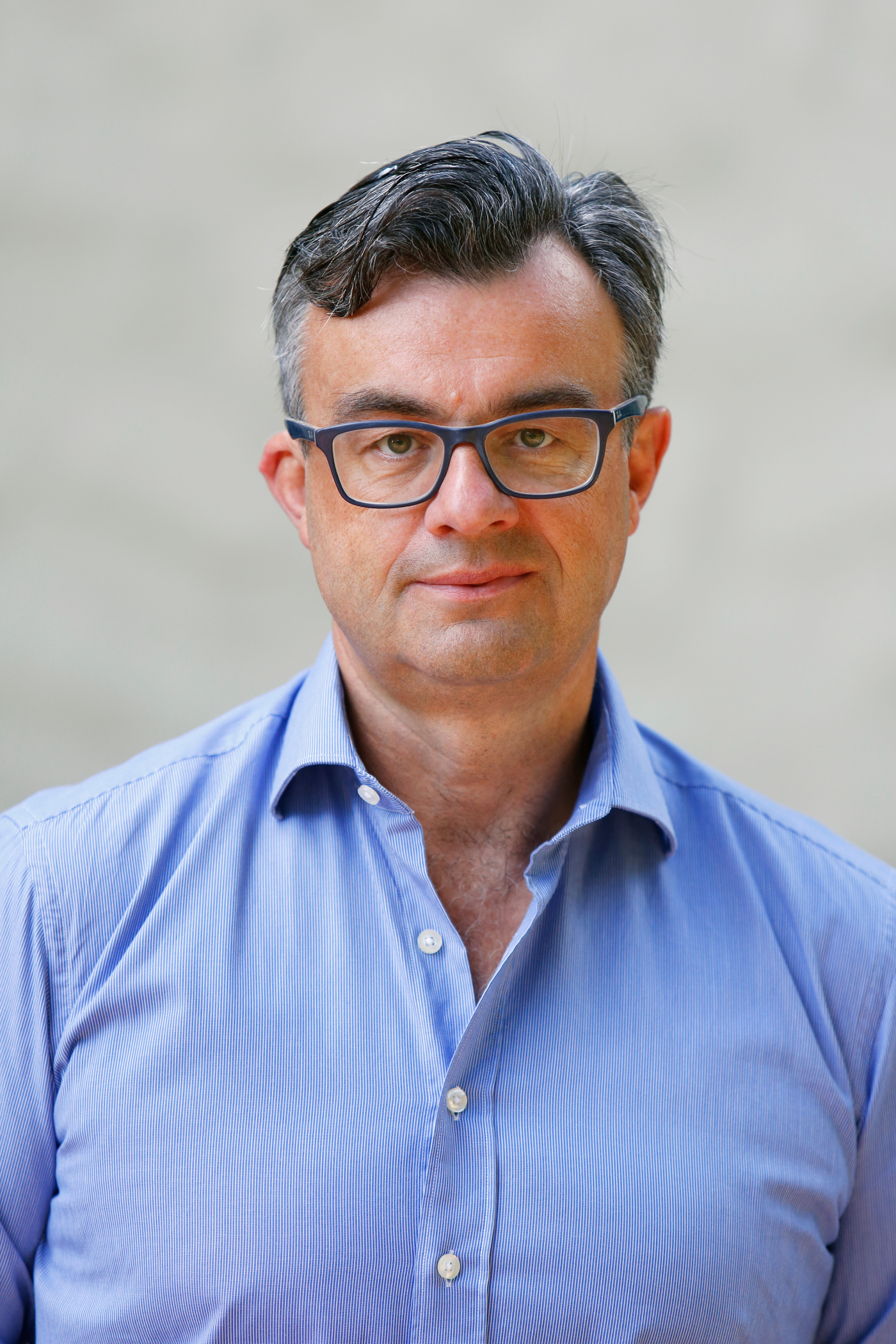
What Statistics and AI Offer Each Other?
Tuesday 5 May 2026, 11:30am – 12:30pm
Abstract: This talk will discuss how thinking carefully about AI inputs and outputs yields more powerful, safer AI. By examining several vignettes, we shall answer questions such as: how do we train language models under cost constraints? What happens when we’ve exhausted all available data? If I start a clinical trial using the drug AI thinks is best, will it pan out? How can we ensure high-quality products when AI is used in a larger workflow? That is, how do I know whether AI automated a task correctly? AI powered predictions are beginning to substitute for real data when collection of the latter is difficult, slow, or costly. How then should we leverage machine learning predictions both as a substitute for high-quality data and as a tool for guiding real data collection?
Biography: Emmanuel Candès is the Barnum-Simons Chair in Mathematics and Statistics at Stanford University, and Professor of Electrical Engineering (by courtesy). His research interests lie at the interface of statistics, information theory, signal processing and computational mathematics. He received his Ph.D. in statistics from Stanford in 1998. Candès has received several awards including the Alan T. Waterman Award from NSF, which is the highest honor bestowed by NSF to early-career scientists, and the MacArthur Fellowship, popularly known as the ‘genius award’. He has given over 100 plenary lectures at major international conferences, not only in mathematics and statistics but in many other areas as well including biomedical imaging and solid-state physics. He was elected to the National Academy of Sciences and to the American Academy of Arts and Sciences in 2014. He received the 2020 Princess of Asturias Award for Technical and Scientific Research, the same year as one of his heroes, Ennio Morricone.
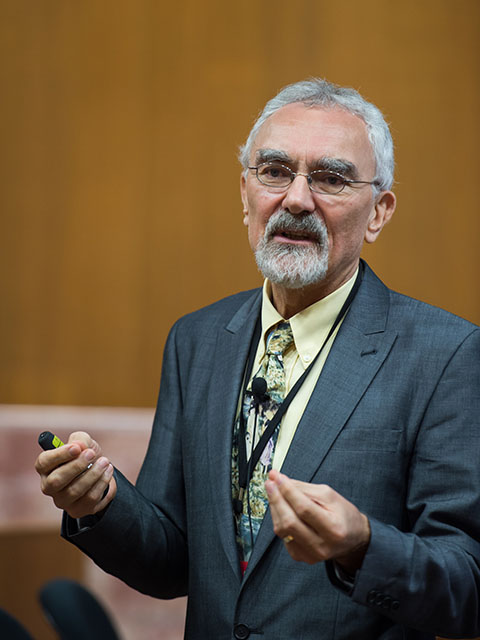
Michael Unser
Variational splines and stochastic processes: From kernel methods (and Norbert Wiener) to ReLU networks
Wednesday 6 May 2026, 11:30am – 12:30pm
Abstract: The Wiener (MMSE) estimator of a Brownian motion (a.k.a. Wiener process) from noisy samples is a linear spline. Similarly, a variational reconstruction problem with second-order total variation regularization yields an adaptive linear spline solution. Deep ReLU networks can also be interpreted as spline functions, albeit in higher-dimensional spaces.
In this talk, I will show how these seemingly disparate results are unified through a common variational framework. I will further relate this perspective to stochastic modeling: kernel methods naturally correspond to Gaussian processes, while neural network approaches can be interpreted in terms of sparse stochastic processes.
Biography: Michael Unser is Full Professor with EPFL’s School of Engineering and the academic director of EPFL’s Center for Imaging, Lausanne, Switzerland. His primary areas of investigation are biomedical imaging and applied functional analysis. He is internationally recognized for his research contributions to sampling theory, wavelets, the use of splines for image processing, stochastic processes, and computational bioimaging. He has published over 400 journal papers on those topics. He is the author with P. Tafti of the book “An introduction to sparse stochastic processes”, Cambridge University Press 2014.
He was born in Zug, Switzerland, on April 9, 1958. He received the M.S. (summa cum laude) and Ph.D. degrees in Electrical Engineering in 1981 and 1984, respectively, from the Ecole Polytechnique de Lausanne (EPFL), Switzerland. From 1985 to 1997, he was with the Biomedical Engineering and Instrumentation Program, National Institutes of Health, Bethesda USA, conducting research on bioimaging.
Dr. Unser has served on the editorial board of most of the primary journals in his field including the IEEE Transactions on Medical Imaging (associate Editor-in-Chief 2003-2005), IEEE Trans. Image Processing, Proc. of IEEE, and SIAM J. of Imaging Sciences. He was general co-chair (with Z.P. Liang) for the first IEEE International Symposium on Biomedical Imaging (ISBI’2002), which was held in Washington, DC, July 7-10, 2002. He is also the founding chair of the technical committee on Bio Imaging and Signal Processing (BISP) of the IEEE Signal Processing Society.
Michael Unser received the Dommer prize for excellence in 1981 (1st rank among all EPFL graduates) and the research prize of the Brown-Boveri Corporation (Switzerland) for his Ph.D. thesis in 1984. He is a fellow of the IEEE (1999), an EURASIP fellow (2009), and a member of the Swiss Academy of Engineering Sciences. He is the recipient of several international prizes including five IEEE-SPS Best Paper Awards, two Technical Achievement Awards from the IEEE (2008 SPS and EMBS 2010), the Technical Achievement Award from EURASIP (2018), and a recent Career Achievement Award (IEEE EMBS 2020). He was awarded three ERC AdG grants: FUNSP (2011-2016), GlobalBioIm (2016-2021), and FunLearn (2021-2026).
Lajos Hanzo
Entangling classical- and quantum-domain information/signal processing
Thursday 7 May 2026, 11:30am – 12:30pm
Abstract: Riding on innovation in signal processing and Moore’s Law, the semiconductor industry has reached nano-meter level integration, which has inevitably led to the emergence of quantum effects. In parallel, progress in quantum computing has fuelled frontier-research across the entire field of potential applications, albeit the number of quantum bits they are capable of handling remains limited. Furthermore, their fidelity requires substantial improvement by sophisticated quantum error mitigation and error correction techniques, because the operation of quantum systems is prone to the deleterious effects of quantum decoherence, which manifests itself in terms of bit-flips, phase-flips or both.
Based on “Quantum Information Processing, Sensing and Communications: Their Myths, Realities and Futures” by Hanzo et al. in Proc. of the IEEE, 2025 ultimately secure quantum communication and powerful quantum machine learning are also discussed, followed by hypothesizing about the feasibility of integrated sensing and communications in the quantum domain.
Biography: Lajos Hanzo (FIEEE’04) received Honorary Doctorates from the Technical University of Budapest (2009) and Edinburgh University (2015). He is a Foreign Member of the Hungarian Science-Academy, Fellow of the Royal Academy of Engineering (FREng), of the IET, of EURASIP and holds the IEEE Eric Sumner Technical Field Award.
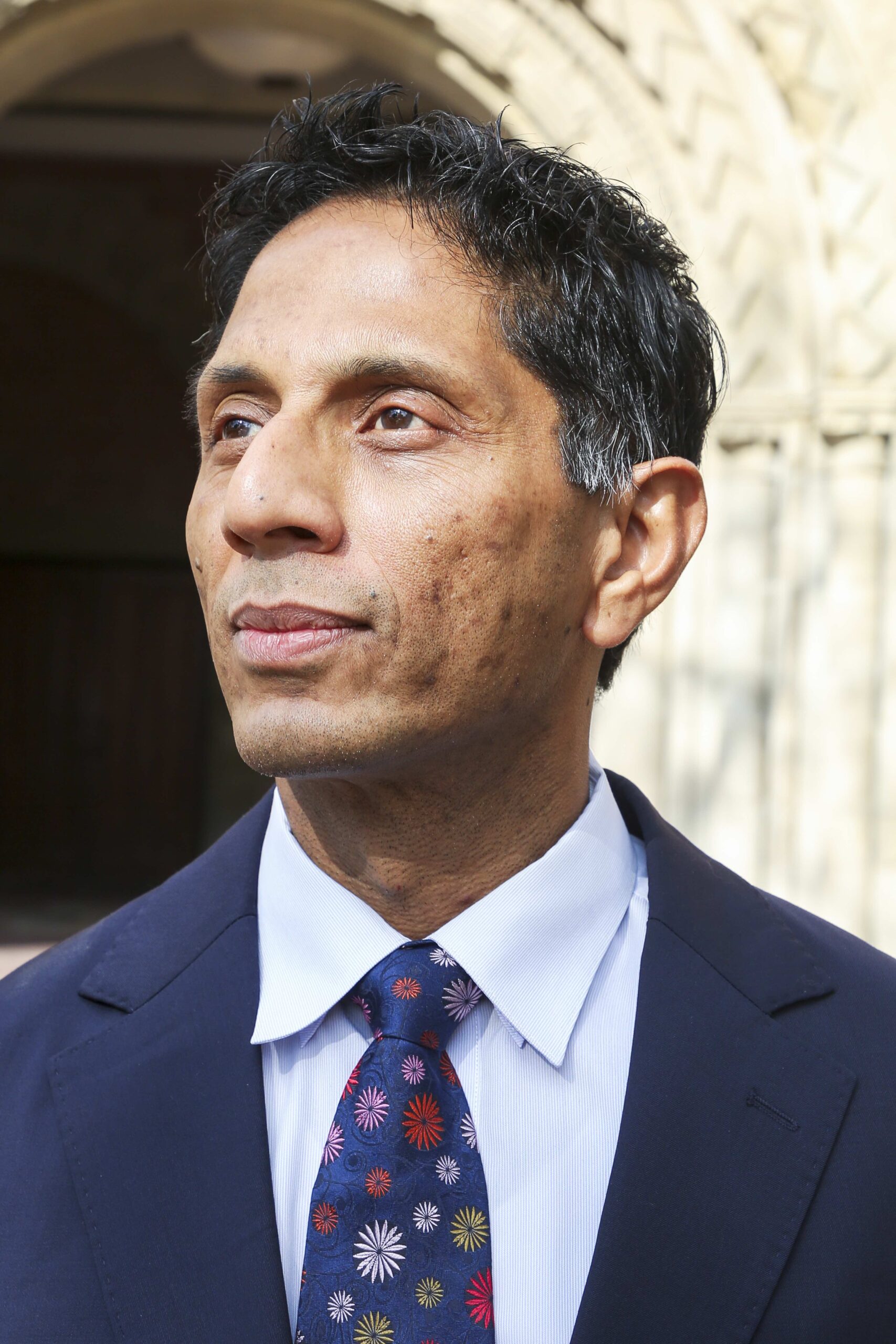
Shrikanth Narayanan
Inside Out and Outside In: Human Communication Through Multimodal Signals in Health and Breakdown
Friday 8 May 2026, 11:30am – 12:30pm
Abstract: Human communication and interaction involve a rich interplay of neurocognitive, physiological, behavioral, and social processes. These processes are made manifest through various multimodal signals that together are shaped by the intricate dynamics of the brain–body–behavior systems. The planning and generation of communicative information, as well the interpretation of its encoded information, are shaped by the individual’s intent and emotion leveraging biophysical human systems. The interplay of these cognitive, affective, and physical dynamics shapes interpersonal communication within its richly flexible sociocultural contexts. Recently, accelerating advances in multimodal sensing, signal processing, and machine learning are enabling deeper scientific understanding and increasingly insightful modeling of the human communication stack. These insights include recognizing critical perturbations associated with illness, disorder, and developmental or environmental challenges. This plenary talk will examine key multimodal signals underlying human speech and language communication, illustrated through use cases spanning neurocognitive and psychological health and wellbeing across the lifespan.
Biography: Shrikanth (Shri) Narayanan is University Professor and Niki & C. L. Max Nikias Chair in Engineering at the University of Southern California (USC), where he is VP for Presidential Initiatives, Professor of Electrical & Computer Engineering, Computer Science, Linguistics, Psychology, Neuroscience, Pediatrics, and Otolaryngology—Head & Neck Surgery, Director of the Ming Hsieh Institute and Research Director of the Information Sciences Institute. Prior to USC, he was with AT&T Bell Labs and AT&T Research. He is a Visiting Faculty Researcher with Google DeepMind. His interdisciplinary research focuses on human-centered sensing/imaging, signal processing, and machine intelligence centered on human communication, interaction, emotions, and behavior. He is a Fellow of the Acoustical Society of America, IEEE, ACM, International Speech Communication Association (ISCA), the American Association for the Advancement of Science, the Association for Psychological Science, the Association for the Advancement of Affective Computing, the American Institute for Medical and Biological Engineering (AIMBE), and the National Academy of Inventors. He is a recipient of awards for research and education including the 2025 IEEE James L. Flanagan Speech and Audio Processing Award, 2024 Edward J. McCluskey Technical Achievement Award from the IEEE Computer Society, the 2023 Claude Shannon-Harry Nyquist Technical Achievement Award from the IEEE Signal Processing Society, 2023 ISCA Medal for Scientific Achievement from the International Speech Communication Association, the 2023 Richard Deswarte Prize in Digital History and a 2022 Guggenheim Fellowship. He has published widely and his inventions have led to technology commercialization including through startups he co-founded: Behavioral Signals Technologies focused on AI based conversational assistance and Lyssn focused on mental health care and quality assurance. He served as the inaugural VP for Education of the IEEE Signal Processing Society and as Editor-in-Chief for the IEEE Journal of Selected Topics in Signal Processing.