

Top Reading
Sorry, there is nothing for the moment.
Most Upvoted

Expert-to-Non-Expert (ETON) Talks

Background

This program consists of lectures that offer an overview of significant advancements and emerging topics in signal processing. The Expert-to-Non-Expert Talk (ETON) series is designed for both students and industry professionals to bridge knowledge gaps. These lectures are delivered by the original inventors or leading experts in the field, providing valuable insights and fostering a deeper understanding of cutting-edge developments.

ETON 1: Location-aware sensing: Can Google maps help our cars see better?

Date: TBD

Abstract: Autonomous vehicles rely on sensors such as LiDAR and radar to perceive their surroundings; however, these sensing systems are often developed independently of navigation applications such as Google Maps. This talk first demonstrates how location awareness, enabled by static street-topology maps, can be leveraged to adapt LiDAR and radar sensing. A live demonstration of a location-aware LiDAR system is included.

The second part of the talk examines the impact of position and orientation uncertainties on location-aware sensing solutions. To address this challenge, tools from stochastic optimization are employed, showing that location-aware sensing remains viable under practical levels of uncertainty. Finally, the talk outlines steps toward the commercialization of location-aware sensing and highlights promising directions for future research.

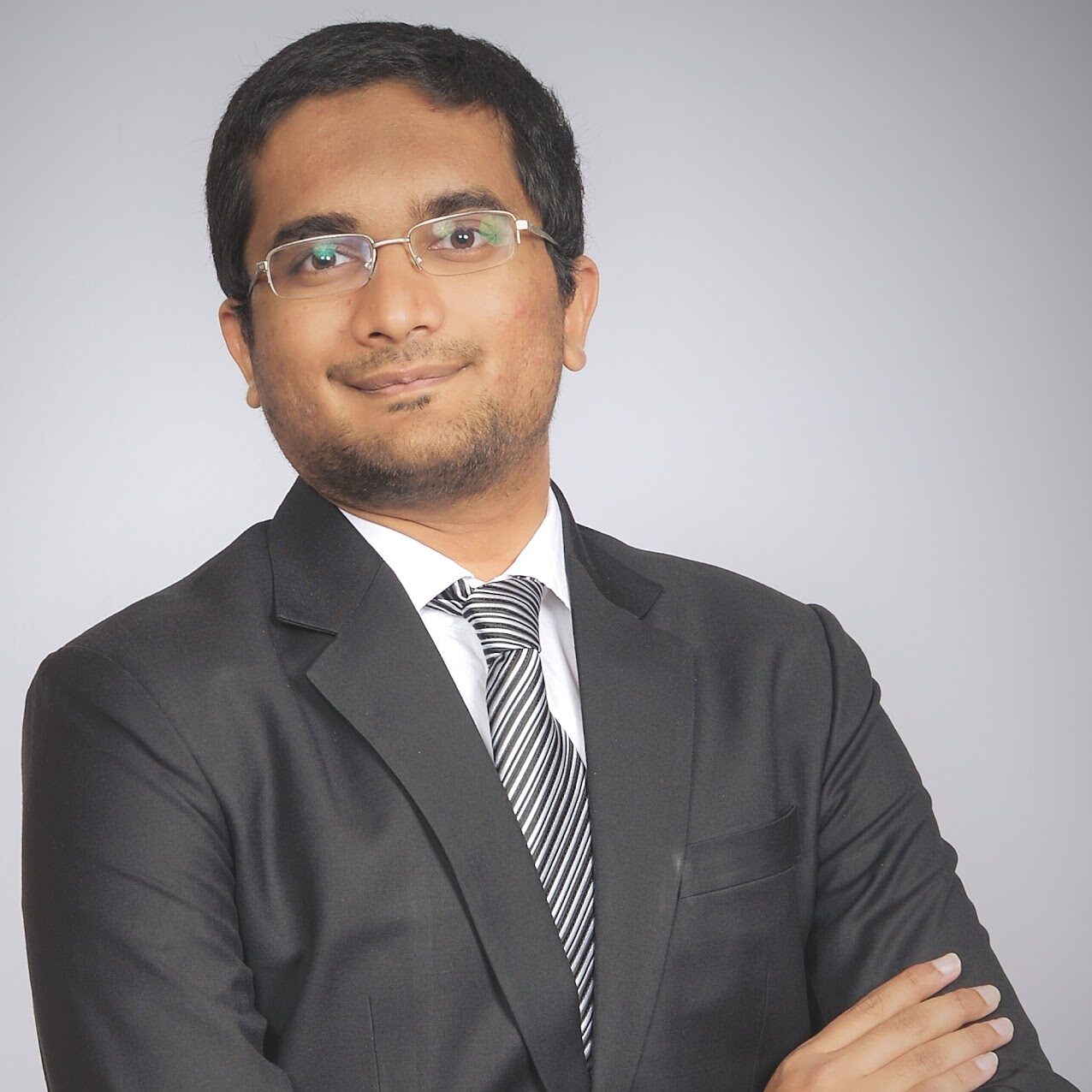
Nitin Jonathan Myers received the B.Tech. and M.Tech. degrees in electrical engineering from IIT Madras in 2016 and the Ph.D. degree in electrical and computer engineering from The University of Texas at Austin in 2020. He is currently a tenured Assistant Professor at the Delft Center for Systems and Control, TU Delft. Previously, he was a Senior Engineer with Samsung Semiconductor’s 5G Modem R&D team. His research focuses on optimization and multi-dimensional signal processing for communications and sensing. He has received multiple academic and research awards, including IEEE paper and demo recognitions, fellowships, and teaching excellence honors at TU Delft.

ETON 2: Deep-Free Physics-Informed Foundation Modeling in Wireless Communications

Date: TBD

Abstract: This talk revisits classical generative modeling approaches, with an emphasis on mixture models developed prior to the rise of deep generative learning, and highlights their continued relevance for the physical layer of wireless communications. Owing to their capacity for analytical inference, mixture models form a natural connection between machine learning and classical signal processing, where covariance information is central to many physical-layer tasks.

By incorporating the underlying physics of wireless channels, these models enable lightweight, interpretable, and easily trainable solutions with strong generalization properties. The framework naturally extends to multimodal settings through multi-view mixture models, providing a unified and efficient approach for handling diverse data types. Overall, the talk bridges classical methods with modern generative modeling and demonstrates that effective generative modeling need not rely solely on deep learning.

Wolfgang Utschick, IEEE Fellow, is a Full Professor of Signal Processing at the Technical University of Munich. His research mission is to integrate artificial intelligence into the physical layer of wireless communication systems. He is actively involved in major German 6G initiatives, including the 6G Life Research Hub and the 6G Bavarian Future Lab, and leads multiple national and international 6G research projects in close collaboration with industry. Since the late 1990s, his work has focused on machine learning for communications, with key contributions to generative modeling for wireless systems.